Scaling Islamic Publications: Translating Arabic Books to Sindhi, Pashto, and Kashmiri
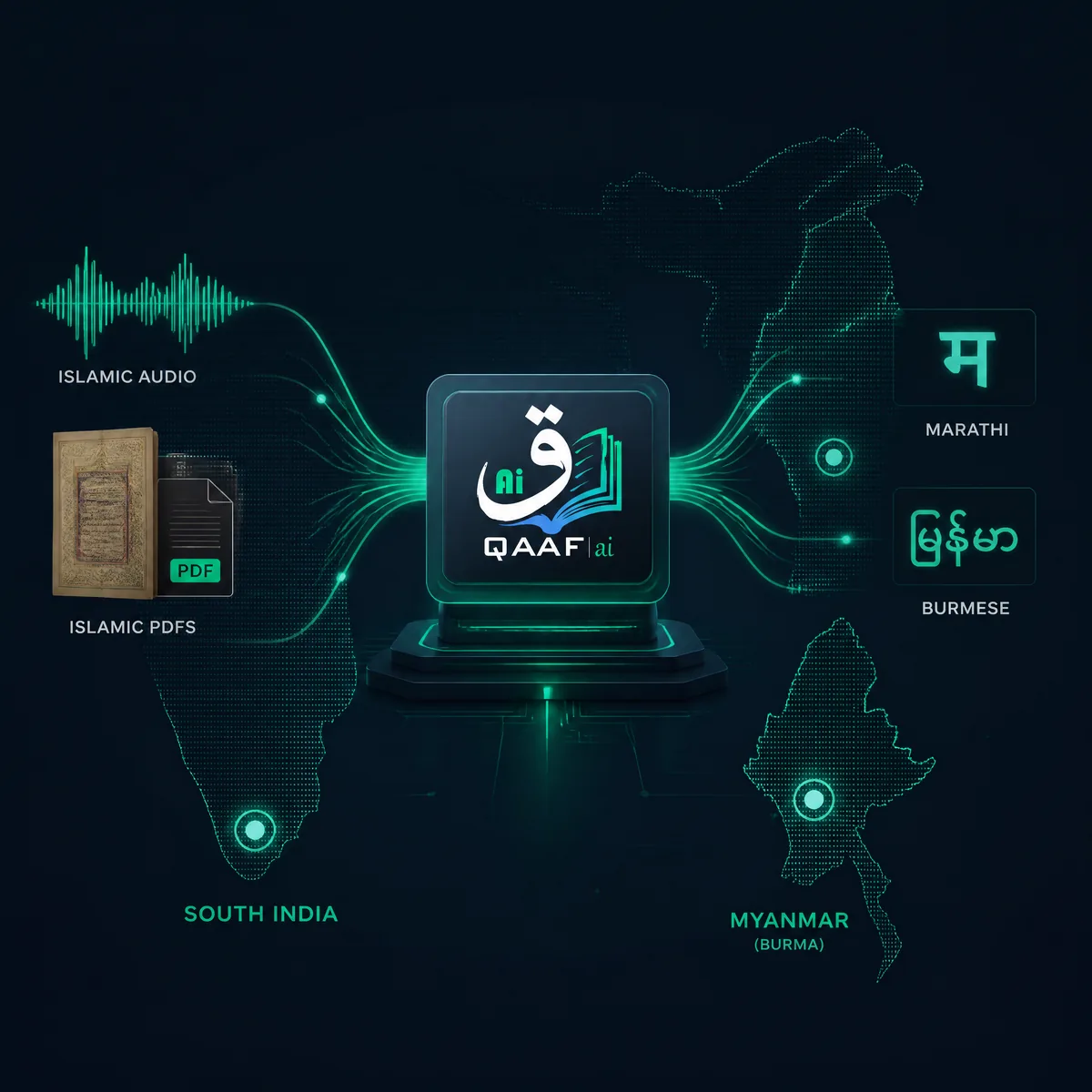
Quick Answer: Translating classical Arabic Islamic literature into regional languages like Pashto or Sindhi requires specialized AI. Tools like Qaaf AI are engineered to bypass the theological errors of standard translators, perfectly protecting Quranic verses and ensuring Fiqh terminology remains accurate in the target language.
The Regional Knowledge Void
There is a massive, untapped demand for classical Islamic literature in regions like Sindh, Khyber Pakhtunkhwa, and Kashmir. Unfortunately, publishing houses struggle to meet this demand because hiring expert human translators for Arabic to Sindhi or Pashto is incredibly expensive and slow.
Why Google Translate is a Liability
Using mainstream AI for this task is a massive liability. General AI engines treat a Fiqh manual the same way they treat a conversational blog post. They fail to recognize the strict, sensitive context of Islamic rulings, leading to translations that are grammatically fine but theologically incorrect.
Scholarly Precision at Scale
The Qaaf AI Book Translator was engineered strictly for this sector. When a publisher uploads a book, the AI ring-fences the Quranic Ayahs and Hadith to protect them from distortion. It then translates the core text into highly accurate Pashto, Sindhi, Urdu, or Kashmiri, maintaining the dignified, scholarly tone required for Islamic texts. View all supported languages here.
💼 Enterprise Solutions for Publishers
Are you a publishing house looking to digitize your massive catalog? Qaaf AI provides personalized AI software services and custom Islamic App Building. We can turn your translated books into a beautiful, monetizable mobile app.
Contact our engineering team for a FREE Consultation:
- 📱 WhatsApp: +92 3302527151
- ✉️ Email: contact.qaafai@gmail.com
About the Author: Eng. Ali
Ali is the Lead AI Architect and Founder of Qaaf AI. With deep expertise in Natural Language Processing (NLP) and Islamic software infrastructure, he provides global IT consulting for Darul Ulooms and NGOs. Qaaf AI's tools are used by established Islamic publishers and research institutes.
Ready to save time?
Upload a file and see the output before you commit to anything.
Try Qaaf AI free